 English
 Spanish
 French
 German
 Italian
 Chinese (Simplified)
 Japanese
 Korean
 Arabic
 Portuguese



 Send Inquiry
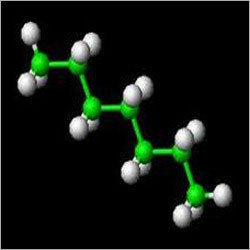
N- Hexane
N- Hexane Specification
- Chemical Name
- N- Hexane
- CAS No
- 110-54-3
- Physical State
- Liquid Coating
- Usage
- For Lab
- Purity(%)
- 99%
N- Hexane Trade Information
- Minimum Order Quantity
- 200 Liters
- Payment Terms
- Paypal, Cash Advance (CA), Telegraphic Transfer (T/T), Cash in Advance (CID)
- Supply Ability
- 200 Liters Per Day
- Delivery Time
- 2-5 Days
- Main Export Market(s)
- Central America, Middle East, South America, Western Europe, Asia, Eastern Europe, North America, Australia, Africa
- Main Domestic Market
- All India
About N- Hexane
# N-Hexane Properties:
9. Flammability: N-hexane is highly flammable and poses a fire hazard. It has a wide flammable range in air (1.15% to 7.8% by volume).
10. Reactivity: It is relatively unreactive under normal conditions, but it can react with strong oxidizing agents.
# Uses of N-Hexane:
# N- Hexane FAQ:
Q. What is n-hexane?
Q. What are the common uses of n-hexane?
Q. Is n-hexane flammable?
Q. Is n-hexane toxic?
Q. What are the health risks associated with n-hexane exposure?
Q. Is n-hexane soluble in water?
Q. What precautions should be taken when working with n-hexane?
Q. Can n-hexane be used as a fuel?
Q. What is the difference between n-hexane and other isomers of hexane?
Q. Where can I find n-hexane for industrial or laboratory use?
Exceptional Quality and Purity
With 99% purity, N-Hexane meets stringent laboratory requirements, providing accuracy and efficiency in chemical analysis and experimentation. Its liquid state ensures easy handling and precise application in various laboratory and industrial procedures.
Versatile Applications
N-Hexane is primarily used for liquid coatings, sample preparation, and as a solvent in laboratory operations. Its effectiveness in dissolving and extracting substances makes it indispensable across chemical, pharmaceutical, and analytical fields.
FAQs of N- Hexane:
Q: How is N-Hexane typically used in laboratory environments?
A: N-Hexane is commonly utilized as a solvent for liquid coating applications, sample extraction, and chromatographic analysis due to its high purity and volatility, which enhances experiment accuracy.Q: What benefits does N-Hexane offer compared to other solvents?
A: N-Hexane provides superior solvency, rapid evaporation, and minimal residue, making it an ideal choice for precise laboratory processes and efficient coating formulations.Q: When should N-Hexane be selected over alternate chemicals for lab work?
A: N-Hexane is preferred when high purity is essential, especially in chromatography and extraction procedures requiring minimal interference and reliable separation results.Q: Where can N-Hexane (CAS No: 110-54-3) be sourced in India?
A: N-Hexane can be obtained from exporters, importers, manufacturers, suppliers, and traders across India who specialize in laboratory chemicals and industrial solvents.Q: What is the typical process for using N-Hexane in liquid coating applications?
A: The process involves dissolving or blending target compounds in N-Hexane, applying the solution as a coating, and allowing rapid evaporation to yield a uniform, residue-free layer.Q: What precautions should be followed while handling N-Hexane in labs?
A: Proper ventilation, the use of PPE (personal protective equipment), and storage in sealed containers are essential when handling N-Hexane due to its flammability and volatile nature.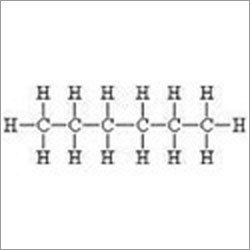

Price:
- 50
- 100
- 200
- 250
- 500
- 1000+

More Products in Aliphatic Hydrocarbon Solvents Category
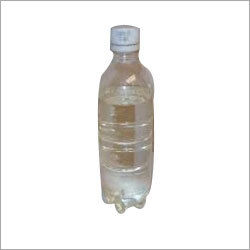
Low Aromatic White Spirit (LAWS)
Minimum Order Quantity : 200 Liters
Purity(%) : 9699%
Physical State : Liquid Coating
Chemical Name : Low Aromatic White Spirit (LAWS)
Usage : For Lab
Application : Paints and coatings, degreasing, cleaning, thinners, adhesives
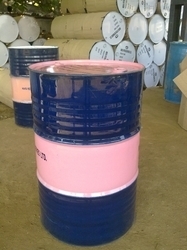
MPRL ALISOL 40
Minimum Order Quantity : 200 Liters
Purity(%) : 99%
Physical State : Liquid Coating
Chemical Name : Alisol 40
Usage : For Lab
Application : Paints, Coatings, Inks, Industrial Cleaners
Heptane Solvent
Minimum Order Quantity : 200 Liters
Purity(%) : 99%
Physical State : Liquid Coating
Chemical Name : HEPTANE
Usage : For Lab
SUPERIOR KEROSENE OIL
Minimum Order Quantity : 200 Liters
Purity(%) : 98%
Physical State : Liquid Coating
Chemical Name : Kerosene Oil
Usage : For Lab

GST : 27AAACM5768N2ZT
 Send Inquiry



 |
MEHTA PETRO REFINERIES LTD.
All Rights Reserved.(Terms of Use) Developed and Managed by Infocom Network Private Limited. |
